How SQL Order of Execution Helps Me Think About Query Performance
SQL started making more sense to me when I stopped looking at it as just syntax and started looking at it as work the database has to do.
That gap between how you write it and how it runs, that is where performance lives.
You may write SELECT first, but the database does not start there first. And once you care about performance, that difference matters. Because every step changes how many rows survive into the next step.
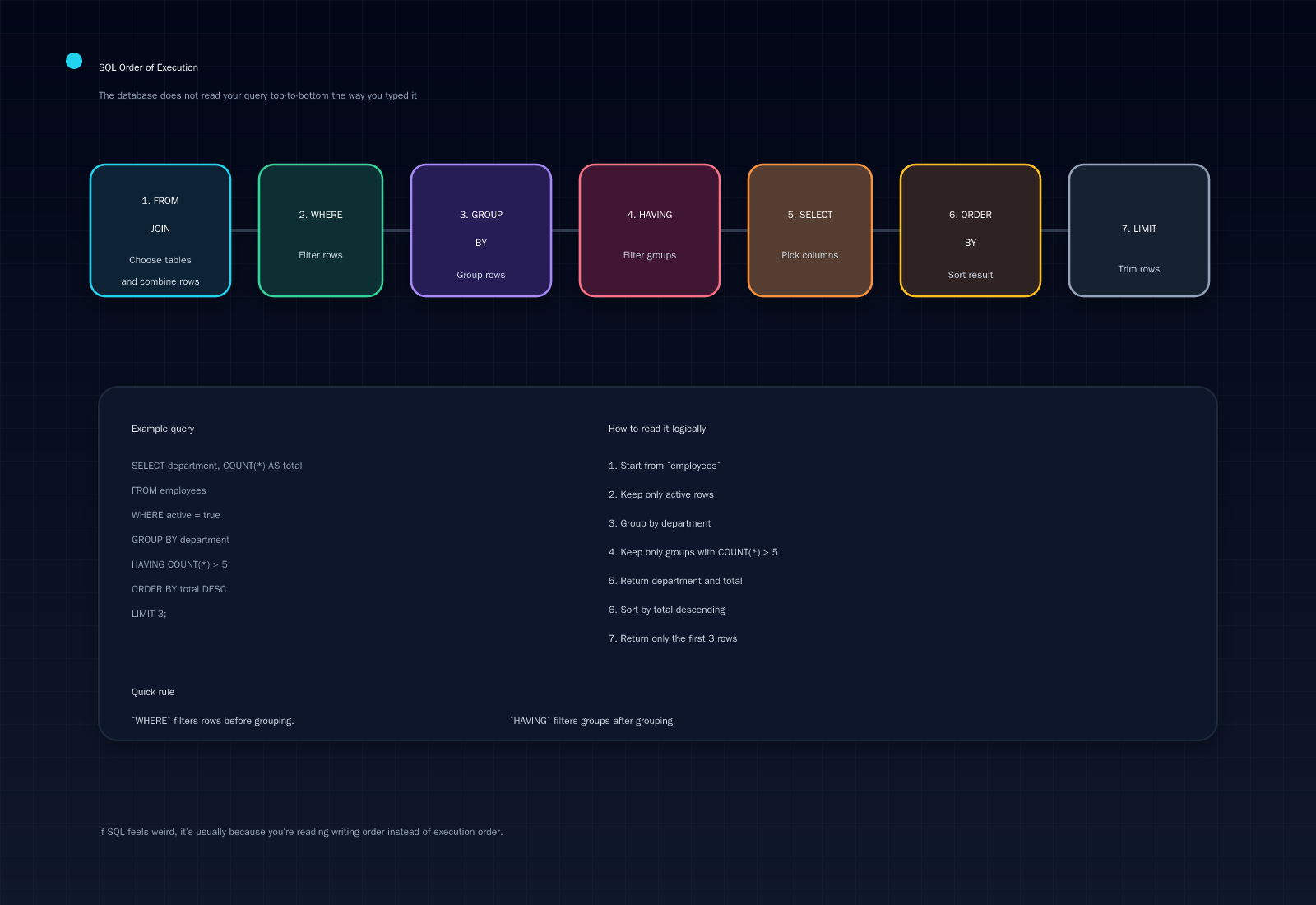
The diagram I’d keep in my head
The order is:
FROM/JOINWHEREGROUP BYHAVINGSELECTORDER BYLIMIT
I like this model because it is not just easier to read. It is also a better way to think about cost.
How I think about it now
This is the version I keep in my head:
- choose the tables
- reduce rows as early as possible
- group only what is left
- filter grouped results
- return the columns you need
- sort at the end
- trim with
LIMIT
That simple shift helps a lot.
If a query feels heavy, I usually ask: where am I forcing the database to carry too much data too far?
That is why WHERE and HAVING are not interchangeable. WHERE cuts rows earlier. HAVING cuts groups later. If you push filtering too late, you may make the database do more work than necessary.
A small example
SELECT department, COUNT(*) AS total
FROM employees
WHERE active = true
GROUP BY department
HAVING COUNT(*) > 5
ORDER BY total DESC
LIMIT 3;
What the database is really doing:
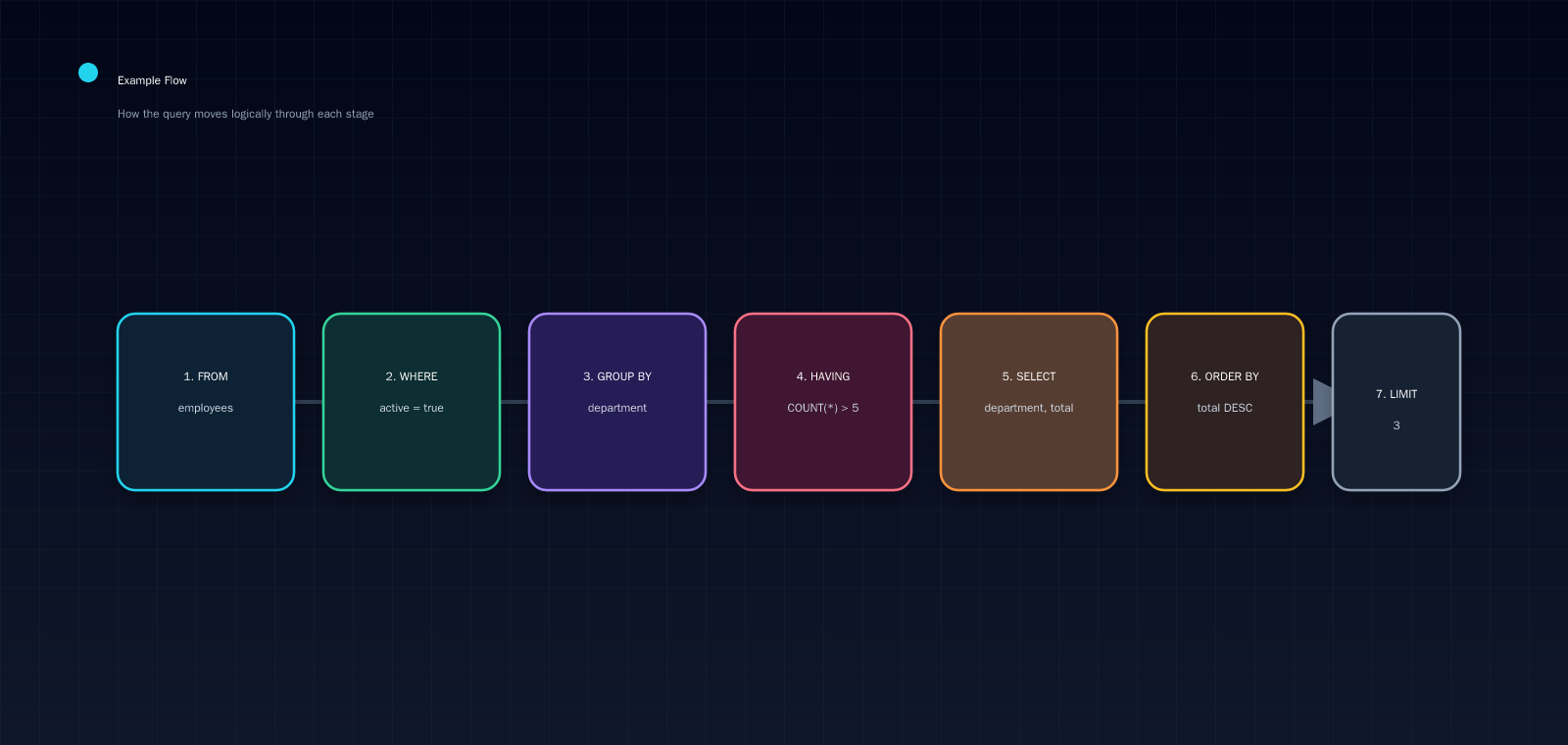
- start from
employees - keep only rows where
active = true - group by
department - keep only groups where
COUNT(*) > 5 - return
departmentandtotal - sort by
total DESC - return only 3 rows
That is also why this mental model helps with performance. If you can reduce rows earlier, grouping and sorting have less work to do later.
My takeaway
For me, SQL got easier once I stopped treating it like a list of clauses to memorize.
Now I think of it as a pipeline, and performance is part of that pipeline.
The database is not just reading your query. It is doing work step by step.
If you understand the order, you usually understand the cost better too.
Keep reading